Butyric acid in the car: Why you should definitely not clean it yourself
Redaktion Akut SOS Clean · 02. Juni 2026 · 6 Min. Lesezeit
Inhalt
Butyric acid in the vehicle is a nightmare for every car owner. The pungent, caustic smell permeates upholstery, carpets and ventilation - and usually only gets worse if you try it yourself. Before you resort to home remedies or take action yourself, you should definitely read on: Experts strongly warn against DIY cleaning attempts, which can make the problem worse.
What makes butyric acid so dangerous in cars?
Butyric acid (butanoic acid) is an organic acid that produces an extremely pungent smell even in tiny amounts. It unfolds its full effect in the vehicle interior:
- Extreme odor intensity: The human nose can detect as little as 0.001 mg per cubic meter of air
- Deep penetration: The acid penetrates deeply into upholstery, foam and plastics
- Long-term damage: Without professional treatment, the smell will remain for months or permanently
- Health hazard: May cause headaches, nausea and respiratory irritation
You definitely shouldn't make these mistakes
Before you do it yourself, read this list of critical mistakes that can drastically worsen the situation:
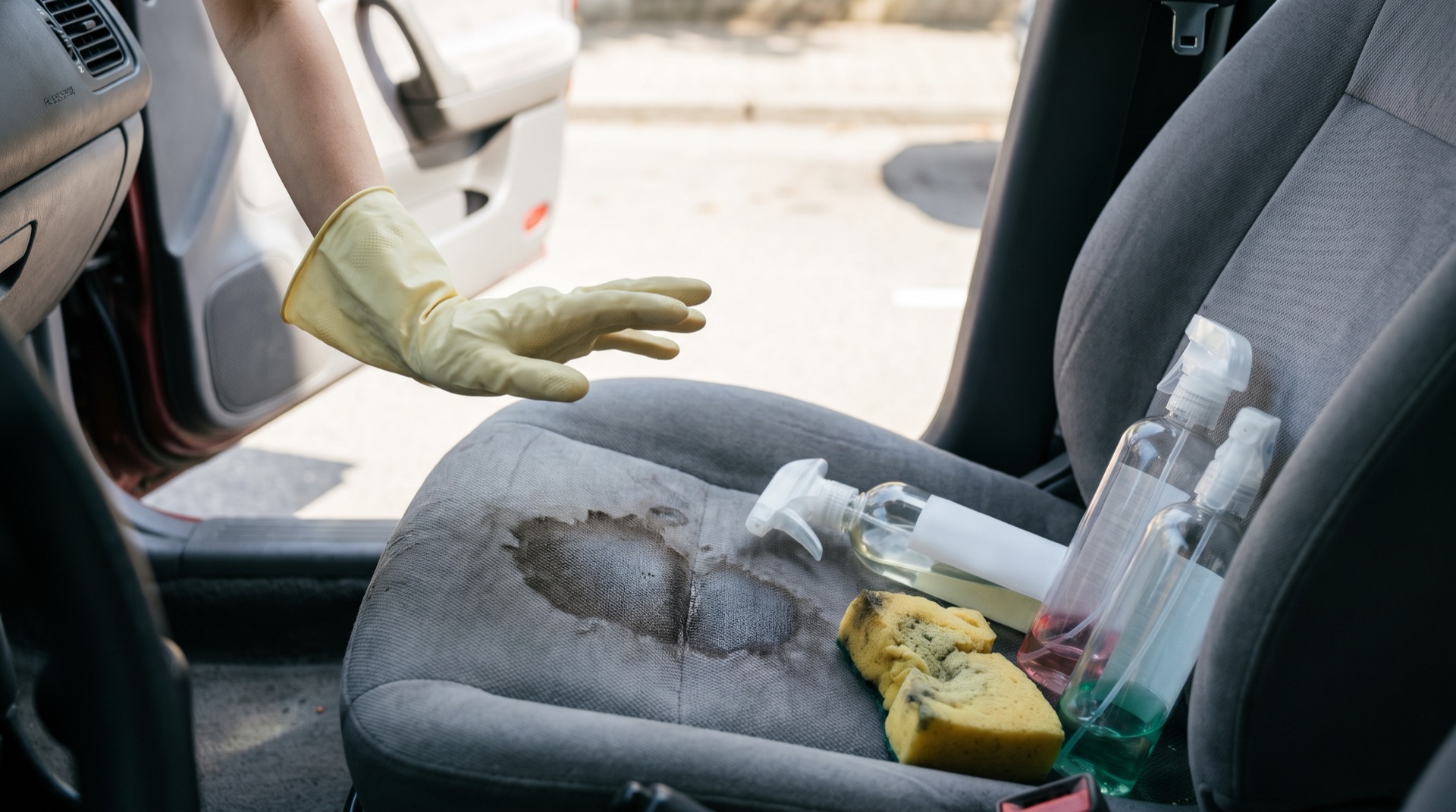
1. Wiping or rubbing the affected areas
Mechanical rubbing only forces the butyric acid deeper into the material. What appears superficial becomes a deep-seated problem.
2. Use home remedies such as vinegar or citric acid
These agents do not neutralize butyric acid - on the contrary: they can trigger chemical reactions that create new smells or damage materials.
3. Using traditional cleaners
Car shampoos, upholstery cleaners or air fresheners only mask the smell for a short time. The butyric acid remains in the material and the smell returns with increased intensity.
4. Use of steam cleaners or hot water
Heat activates the butyric acid and distributes it via steam into previously uncontaminated areas of the vehicle - including the ventilation system and roof lining.
5. Long wait before professional cleaning
The longer butyric acid remains in the vehicle, the deeper it penetrates. After 24-48 hours, the upholstery and foam are often permanently contaminated.
6. Multiple self-experiments
Any attempt at cleaning without specialized means worsens the situation. The acid spreads further, materials are damaged, and the resale value drops dramatically.
The right approach: step by step
Immediate measures (first 30 minutes)
Do not ventilate the vehicle closed. Open all doors and windows, but avoid sitting in the car. The fumes are harmful to health.
Do not touch affected areas with bare hands. Butyric acid can cause skin irritation. If contact occurs: Wash off immediately with plenty of water.
Document the damage photographically. For insurance and evidence preservation, you should take photos of all affected areas.
Contact professional help (within the first few hours)
Call specialized experts immediately – ideally a service provider like Acute SOS Clean, which specializes in odor neutralization and special cleaning.
Why specialists of all people?
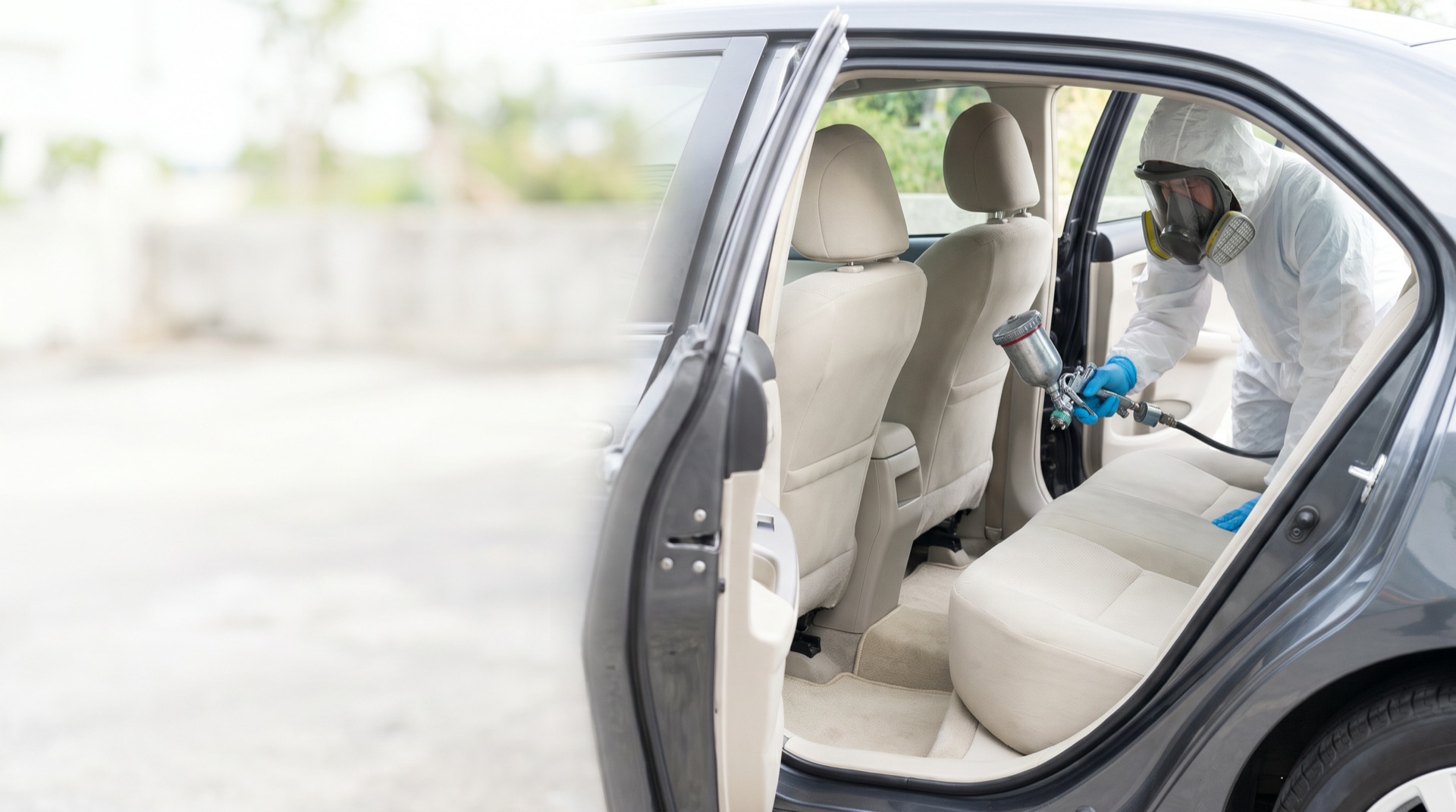
- Special neutralizing agents: Professionals use enzymatic or chemical neutralizers that break down butyric acid at the molecular level
- Deep cleaning procedures: Special equipment is used to remove the acid from deep layers of upholstery and foam
- Ozone treatment: Controlled ozonation neutralizes odor molecules in hard-to-reach areas such as ventilation ducts
- Material protection: Professional treatment prevents consequential damage to upholstery, plastics and electronics
What experts do differently
At Removing butyric acid in the car - Why self-experiments make everything worse We have already explained in detail why there is no alternative to professional cleaning. The specially developed procedures include:
Phase 1: Analysis and backup
- Identification of all contaminated areas using special equipment
- Protection of unaffected vehicle parts
- Determination of the degree of contamination
Phase 2: Neutralization
- Use of special butyric acid neutralizers
- Deep extraction from upholstery and carpets
- Treatment of ventilation and air conditioning
Phase 3: Post-treatment
- Ozone treatment to completely eliminate odors
- Control measurements of indoor air quality
- Material sealing for long-term protection
Costs vs. loss of value: A clear calculation
Many car owners shy away from the costs of professional cleaning - and thus risk a much higher financial loss:
Professional butyric acid removal: Depending on vehicle size and degree of contamination, 500-1,500 euros
Loss of value due to improper treatment: A permanently contaminated vehicle loses 30-70% of its value or is practically unsaleable.
There are also health risks for you and your family if the vehicle continues to be used.
Frequently asked questions about butyric acid in cars
Can I still save the car after a butyric acid attack? Yes, but only with professional help within the first 24-48 hours. The quicker you react, the better the chances of success.
How long does professional cleaning take? Depending on the level of contamination 1-3 days. In severe cases, multi-stage treatment may be necessary.
Does insurance cover the costs? In the event of vandalism damage, fully comprehensive insurance often covers the cleaning costs. Check your insurance coverage and document the incident for the police.
What happens if I don't do anything? The smell does not get weaker over time - on the contrary. It can even intensify due to temperature fluctuations and humidity. The vehicle becomes permanently unusable.
Conclusion: Stay away from your own experiments
Butyric acid in the car is not a problem that can be solved with home remedies or conventional cleaners. Any self-attempt makes the situation worse, spreads the acid deeper into the material and can lead to permanent damage.
Your action plan:
- Ventilate the vehicle immediately (do not clean it!)
- Document damage
- Contact specialists (ideally within 24 hours)
- Have a professional deep clean carried out
- Follow-up inspection and odor measurement
At Akute SOS Clean, we have developed specialized processes that remove butyric acid from vehicles in a sustainable and material-friendly manner. Our experts are available 24/7 and can be on site within a few hours in emergencies.
Are you acutely struggling with butyric acid in your car? Don't wait any longer - every hour counts. Contact us now for a free initial consultation and quick help. Our specialists will analyze your situation and create an individual cleaning plan.
For similar odor problems like Remove cat urine smell or Remove the smell of decay We also offer professional solutions.