Removing butyric acid in the car - Why self-experiments make everything worse
Redaktion Akut SOS Clean · 02. Juni 2026 · 7 Min. Lesezeit
Inhalt
- What is butyric acid and why is it so problematic?
- Those affected make these mistakes again and again - and make things worse
- What you definitely shouldn’t do – The No-Go List
- The correct procedure for butyric acid in the vehicle
- This is how professionals like Akute SOS Clean work
- Why speed is crucial
- Conclusion: Hands off – professionals come on!
- Frequently Asked Questions (FAQ)
Butyric acid in the vehicle is an absolute nightmare: the acrid, vomit-like stench penetrates every corner and cannot simply be wiped away. Many of those affected immediately resort to home remedies or commercially available cleaners - but that is exactly what usually makes the situation dramatically worse. In this article you will learn why you should be concerned about butyric acid contamination in the car no cleaning attempts of your own companies should and how professional specialists can solve the problem sustainably.
What is butyric acid and why is it so problematic?
Butyric acid (butanoic acid) is a colorless, oily liquid with an extremely pungent odor that can be detected even in the lowest concentrations. It is often used in attacks, acts of revenge or vandalism - sometimes even a small splash is enough to make a vehicle unusable for months.
The problem: Butyric acid is not water-soluble and penetrates deeply into porous materials - upholstery, carpets, paneling, ventilation ducts and even insulation. Conventional cleaning products only postpone the problem or spread the substance even further.
Those affected make these mistakes again and again - and make things worse
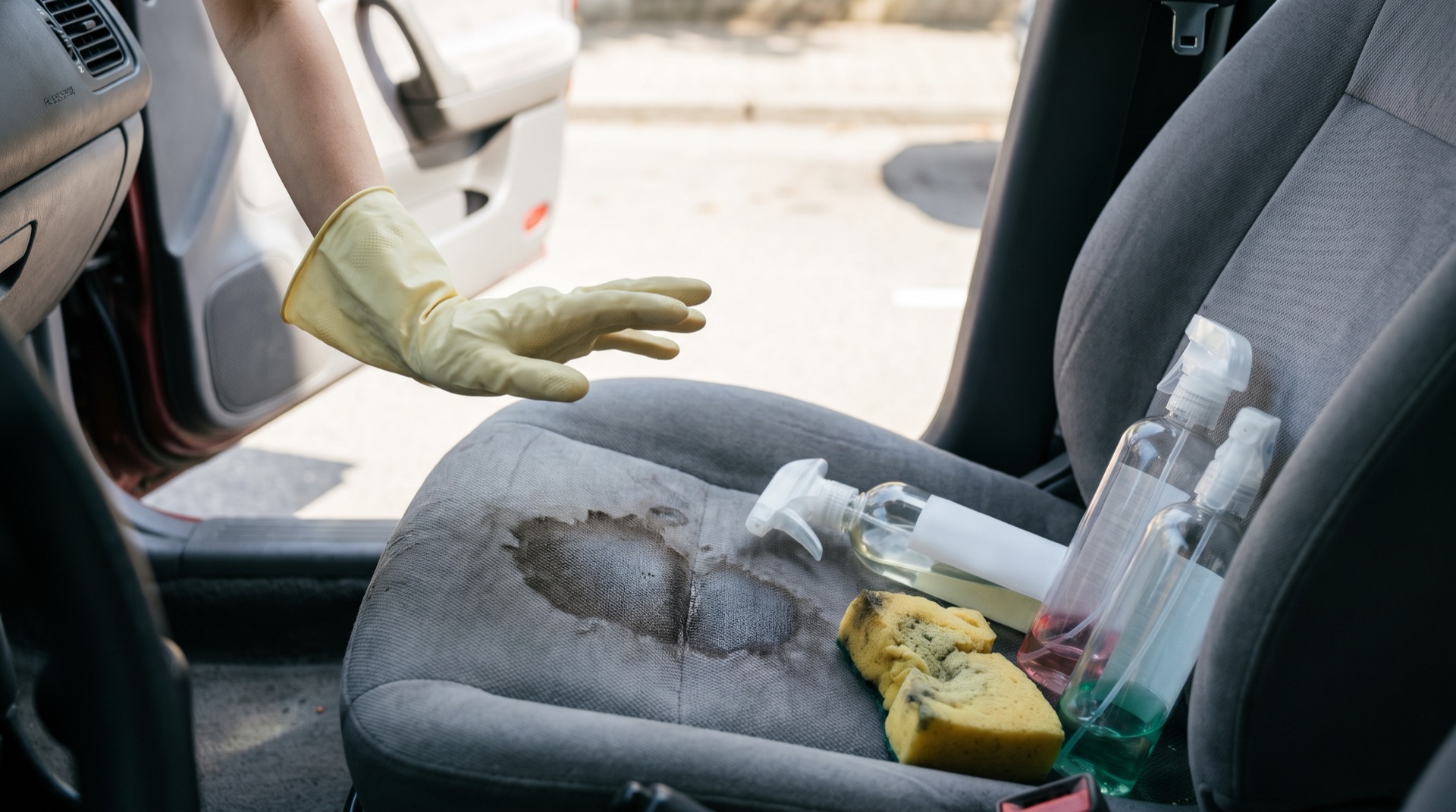
1. Wipe off with soap and water
Why this hurts: Butyric acid is fat-soluble, not water-soluble. Water only spreads the substance over a larger area and drives it deeper into the material. In this way, you create a widespread problem from local contamination.
2. Use scent sprays, air fresheners or vinegar
Why this hurts: These agents only mask the smell for a short time - the butyric acid remains in the material. As soon as the scent molecules are gone, the smell returns. Vinegar or other acids can also attack materials and cause discoloration.
3. Turn on the air conditioning or ventilation
Why this hurts: The ventilation system distributes butyric acid throughout the vehicle and settles in the ducts, filters and fans. This makes subsequent cleaning significantly more complex and expensive.
4. Remove upholstery or carpets yourself
Why this hurts: Without expertise and protective equipment, you will contaminate yourself, your clothing and possibly your living spaces. Butyric acid is extremely sticky and can cause severe respiratory and skin irritation if handled improperly.
5. Use heat or steam cleaner
Why this hurts: Heat activates butyric acid and massively increases the smell. In addition, pores in materials open so that the substance penetrates even deeper.
What you definitely shouldn’t do – The No-Go List
- ❌ Do not clean yourself – They make the contamination worse
- ❌ Do not use water – Butyric acid is not water soluble
- ❌ No home remedies (Baking powder, vinegar, baking soda) – ineffective with butyric acid
- ❌ No fragrance sprays or ozone devices for private users – only cover up, do not remove
- ❌ No standard car cleaning – normal companies are not specialized
- ❌ Do not turn on the ventilation – spreads the contamination
- ❌ Do not handle without protective clothing – Health hazard
- ❌ Don't wait and hope – the longer, the deeper it penetrates
The correct procedure for butyric acid in the vehicle
Step 1: Stop immediately and secure the vehicle
As soon as you notice butyric acid in the car:
- Stop engine and let all passengers get out
- Close windows and doorsto prevent further spread
- Don't drive any further – ventilation distributes contamination
- Remove clothing, if it has been in contact, and pack it in plastic bags
Step 2: Contact professional help – immediately
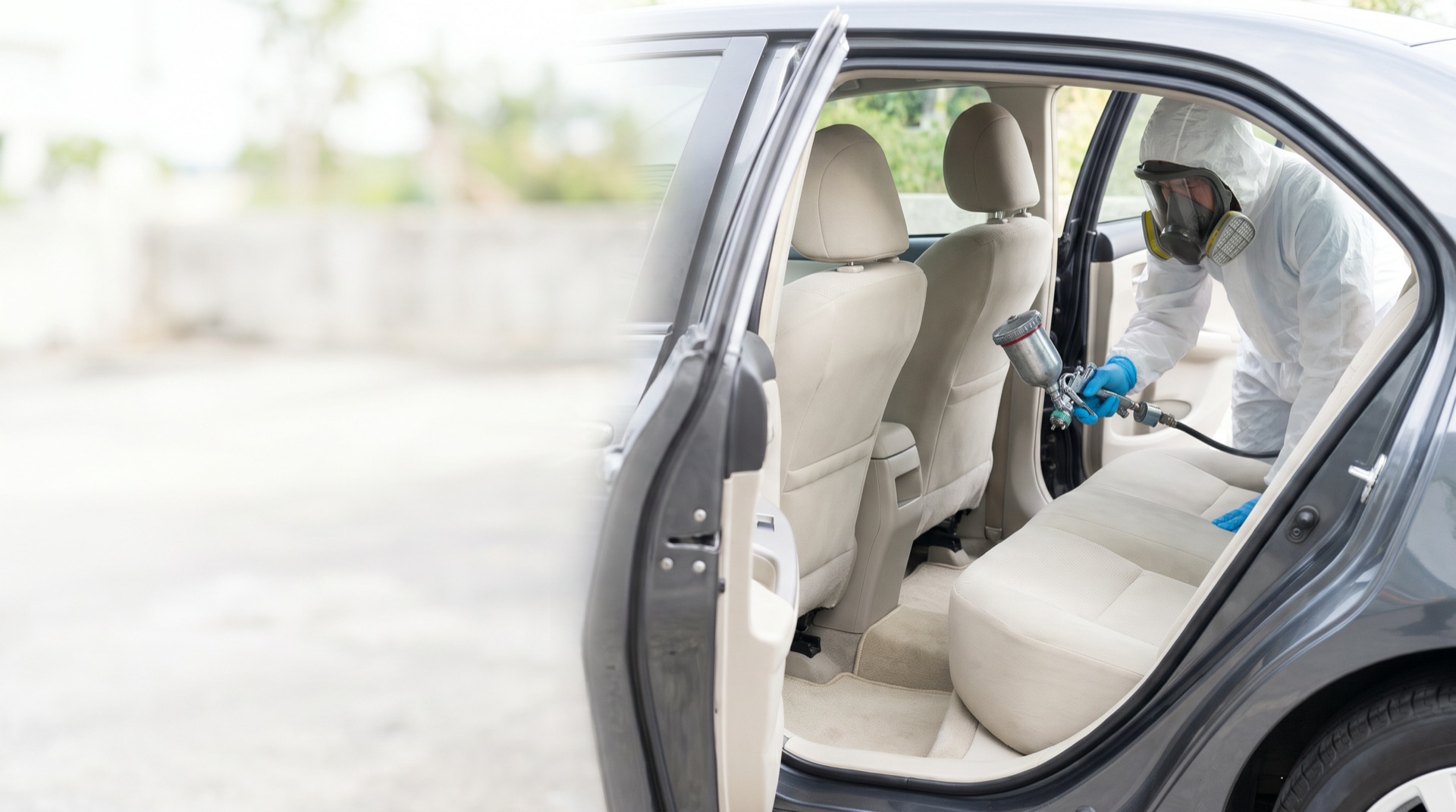
Immediately call a specialized service provider such as Acute SOS Clean on. Professionals are available 24/7 and can correctly assess the situation.
Why specialists?
- Have special neutralizing agents that chemically bind butyric acid
- Working with professional protective equipment
- Know all the hiding places in the vehicle (ventilation, insulation, cavities)
- Use special equipment (e.g. ozone generators, thermal fog, molecular purification)
- Have experience with total cleaning and can assess whether parts need to be replaced
Step 3: Do not move the vehicle
Leave the vehicle parked until the specialists arrive on site. Do not transport it to a workshop yourself - you risk the smell settling throughout the interior.
Step 4: Documentation for insurance
Photograph the condition of the vehicle and document the incident. In the event of vandalism or criminal offenses, report it to the police. Many insurance companies cover the costs of professional renovation if third-party fault is proven.
This is how professionals like Akute SOS Clean work
Specialized service providers such as Acute SOS Clean have processes specifically developed for butyric acid contamination:
1. Analysis and localization
Special equipment is used to determine where the butyric acid has settled - even in invisible places such as ventilation ducts, under seats or in the insulation.
2. Chemical neutralization
Professional neutralizers bind butyric acid molecularly and break it down. These funds are not available to private individuals and require specialist knowledge to use.
3. Deep cleaning of all affected materials
Upholstery, carpets and paneling are treated using special processes - depending on the material, extraction cleaning, enzymatic cleaners or molecular filters are used.
4. Disinfection and odor elimination
After neutralization, disinfection and final odor removal takes place using ozone or thermal mist technology. These processes reach even the smallest cracks.
5. Air conditioning and ventilation cleaning
The entire ventilation system is dismantled, cleaned and disinfected. Filters are replaced, fans and ducts are treated.
6. Quality control
Once the work has been completed, the vehicle is checked for residual odors - it will only be released if no traces can be detected.
Why speed is crucial
The longer butyric acid remains in the vehicle, the deeper it penetrates into materials. What can still be easily treated after a few hours can require total dismantling of the interior after days or weeks - or even mean total economic loss.
Therefore, act within the first 24 hours – this not only saves costs, but also significantly increases the chances of complete recovery.
Conclusion: Hands off – professionals come on!
Butyric acid in the car is not a case for home experiments or standard car washes. Every well-intentioned cleaning attempt worsens the situation and makes subsequent professional renovation more complex and expensive.
The only correct approach:
- Stop cleaning immediately
- Secure the vehicle and do not use it any further
- Contact professional specialists such as Acute SOS Clean
- Act quickly – every hour counts
With the right experts at your side, your vehicle will be fully usable again even after butyric acid contamination - clean, odor-free and without any health risks. If you suspect something, do not hesitate to get help immediately.
---
Those affected by butyric acid contamination in the vehicle? Contact Acute SOS Clean at 0800 11 12 13 14 – Available 24/7, in use throughout Germany. Our specialists will analyze your situation free of charge and advise you on how to proceed.
---
Frequently Asked Questions (FAQ)
Can I remove butyric acid myself using home remedies? No. Home remedies such as vinegar, baking powder or baking soda are ineffective with butyric acid and can make the contamination worse. Only specialized neutralizing agents work.
How much does professional butyric acid removal in the car cost? The costs depend on the extent of the contamination – from €500 for a quick initial response to several thousand euros for deep penetration. Acting quickly saves money.
Does insurance cover the costs? If vandalism or third-party negligence is proven, many fully comprehensive or partially comprehensive insurance policies will cover the renovation costs. Document the damage and file a report.
How long does a professional renovation take? Depending on the severity between 1 and 5 days. With immediate intervention often completed within 24-48 hours.
Is the vehicle really odor-free afterwards? Yes, if carried out professionally, the butyric acid is completely neutralized and the smell is permanently eliminated - not just masked.
---
Meta description: Butyric acid in the car? Stay away from your own experiments! Find out why DIY cleaning is harmful & how professionals like Akute SOS Clean can help sustainably.
URL slug: remove butyric acid from car