Removing blood stains from carpet – home remedies & professional tips
Redaktion Akut SOS Clean · 01. Januar 2024 · 6 Min. Lesezeit
Inhalt
Blood stains in carpets are among the most stubborn stains in the home. Regardless of whether it is caused by a small injury, a mishap or a major event - blood quickly penetrates deep into the carpet fibers and leaves behind visible stains and often unpleasant odors. The quicker you react, the better your chances of completely removing the stain.
Why are blood stains in carpet so stubborn?
Blood is a complex organic substance that consists primarily of protein, iron and other components. As soon as blood hits a carpet, it immediately begins to bond with the fibers. The proteins in the blood are sensitive to heat. If a blood stain is treated with warm or hot water, these proteins can coagulate and bond even more firmly to the carpet.
Immediate measures for fresh blood stains
When it comes to fresh blood stains, every minute counts. The sooner you act, the less time the blood has to penetrate deep into the carpet. Only use cold water. Gently blot the stain with a clean, light-colored cloth or paper towel. Always work from the outside in to prevent the stain from spreading further.
10 home remedies for blood stains in carpets
Home remedies can be very helpful for blood stains if used correctly. However, it is important to test each product on an inconspicuous area first.
1. Cold water
Cold water is the most important ingredient in removing blood stains. It prevents the protein from coagulating in the blood and becoming permanently lodged in the carpet. Soak a clean cloth in cold water and gently blot the stain.
2. Salt paste
Salt can draw moisture and blood components from the carpet fibers. To do this, mix salt with a little cold water to form a thick paste. Apply the salt paste to the blood stain and leave it on for about 30 minutes.
3. Baking soda
Baking soda is a proven home remedy for many types of stains. It can help to bind moisture and loosen light discoloration. Mix baking soda with cold water to form a paste and apply it to the stain. After an exposure time of around 30 to 60 minutes, the paste can be removed.
4. Detergent and hydrogen peroxide (3%)
For stubborn blood stains, a combination of mild detergent and hydrogen peroxide can be helpful. Hydrogen peroxide has an oxidizing effect and can lighten discoloration. However, this method should be used with caution as hydrogen peroxide can have a bleaching effect.
5. Lemon juice
Lemon juice has a slightly bleaching effect and can help reduce dark discoloration on light-colored carpets. Put some lemon juice on the stain and leave it to act briefly.
6. Bile soap
Gall soap is a classic remedy for organic stains such as blood, grease or protein residues. It can penetrate deep into the fibers and dissolve dirt. Lightly moisten the affected area with cold water and apply some gall soap.
7. Vinegar
Vinegar can help neutralize odors and loosen light stains. However, it should always be used diluted. Mix vinegar and cold water in a 1:1 ratio.
8. Baking soda
Baking soda is particularly suitable for neutralizing odors and can be used as a supplementary method after the actual stain treatment. Sprinkle baking soda on the slightly damp area and leave it on for several hours or overnight.
9. Dishwashing liquid
Mild dish soap can help loosen residue from the carpet. However, it should only be used sparingly so that no sticky residue remains in the carpet. Add a few drops of dishwashing liquid to cold water and gently dab the stain.
10. Enzyme cleaner
Enzyme cleaners are particularly effective on organic stains because they can specifically break down protein components. This makes them very suitable for blood, urine, vomit or other biological residues.
Removing dried blood stains – what to do?
Dried blood stains are more difficult to remove because the blood has already bonded to the carpet fibers. However, cleaning is often still possible if you proceed patiently. First soak the stain with cold water, then with salt paste (leave it on for 30 minutes). You can then carefully apply hydrogen peroxide 3%. An enzyme cleaner can help with stubborn stains.
What does NOT help – these methods are myths
There are many tips circulating on the Internet that are supposed to help with blood stains. However, some of them make the problem worse rather than solving it. Be sure to avoid warm or hot water - it causes the proteins in the blood to clot and fixes the stain permanently. Rubbing vigorously is also problematic because it enlarges the stain and works it deeper into the carpet.
When to call a professional
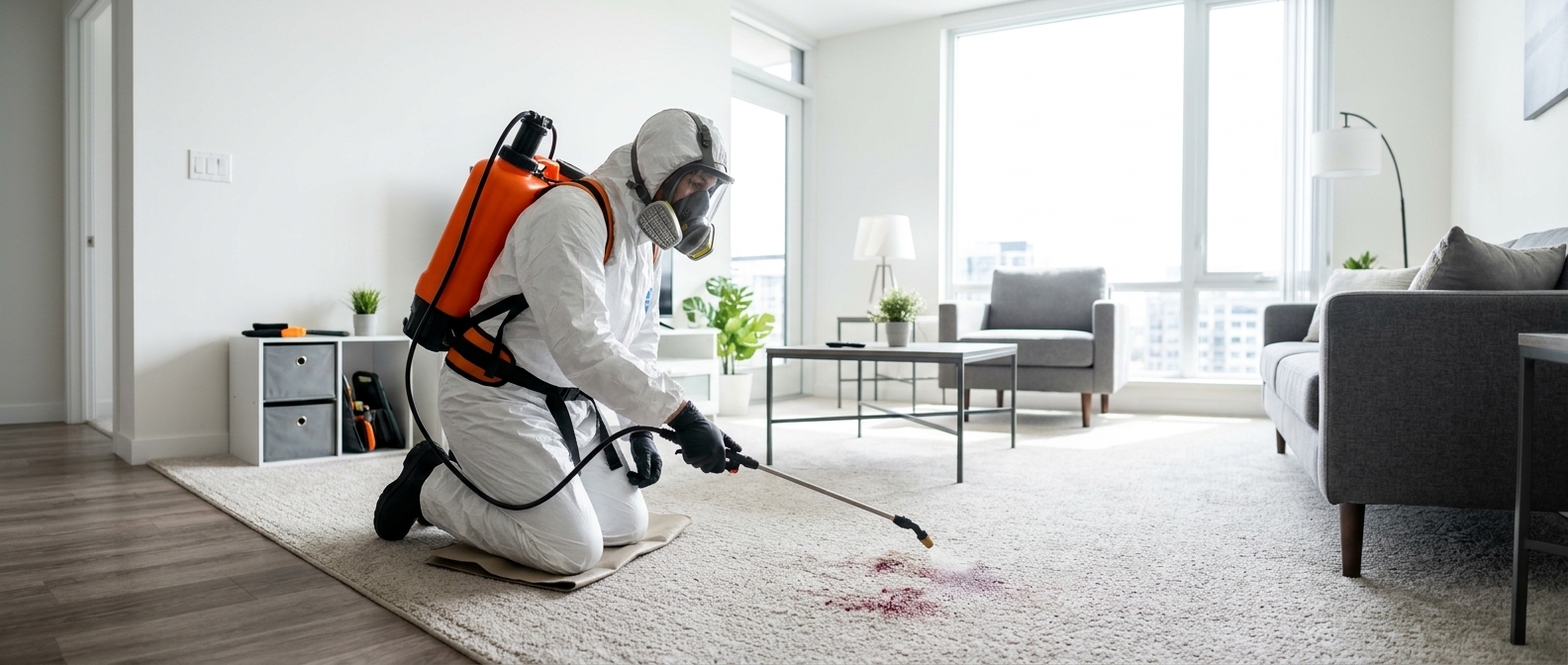
In some cases, home remedies are not enough. This is especially true for larger blood stains, heavily dried dirt, unpleasant odors or high-quality carpets. If there are stains larger than 30x30 cm, if there is suspicion of foreign blood or if blood has seeped into the back of the carpet, we recommend a professional Crime scene cleaning. A specialist company works with special cleaning products, professional equipment and hygienic procedures.
Frequently asked questions
Can you still remove dried blood stains from carpet?
Yes - but it's more difficult than with fresh stains. Soak the stain with cold water and salt paste (30 minutes), then treat with hydrogen peroxide 3%. An enzyme cleaner can help with stubborn stains.
Are blood stains in carpet a danger?
With someone else's blood: yes. Hepatitis B/C and HIV can survive in dried blood for days. Always wear disposable gloves. If the source of the blood is unknown or the amount is large, call a certified crime scene cleaner.
Which home remedies should I NOT use if there is blood in the carpet?
Warm water (causes blood to clot), pure vinegar (bleaches some carpets), chlorine cleaner (toxic fumes + carpet damage). Always start with cold water.
When is the professional worth it?
For stains larger than 30x30 cm, if foreign blood is suspected, if blood has seeped into the back of the carpet or if home remedies do not work.