Remove blood stains
Redaktion Akut SOS Clean · 01. Januar 2024 · 5 Min. Lesezeit
Inhalt
- Removing blood stains – the most important immediate measures
- Why are blood stains so difficult to remove?
- Remove blood stains from carpet
- Remove blood stains from the sofa and upholstered furniture
- Remove blood stains from the mattress
- Remove blood stains from clothing
- Remove blood stains from wood and hard floors
- When is professional help necessary?
- Frequently asked questions about removing blood stains
Blood stains are one of the most stubborn stains in the home. Whether from a small cut, an accident, or a nosebleed episode, blood leaves visible marks on almost any surface that become increasingly difficult to remove over time.
The most important principle is: the faster you act, the better the chances of removal without leaving any residue. Fresh blood stains are usually much easier to treat than dried ones. But there are also effective methods for older stains - from tried-and-tested home remedies to professional cleaning.
In this guide, we'll show you step by step how to remove blood stains from various surfaces. We also explain why some methods work and others don't - and when it makes sense to call in a professional cleaning service.
Removing blood stains – the most important immediate measures
Blood contains hemoglobin - an iron-containing protein that is responsible for transporting oxygen throughout the body. When it comes into contact with air, the iron in hemoglobin oxidizes and forms a solid bond with the material.
In addition, blood coagulates when exposed to heat - similar to egg whites when cooked. This is why you should never treat blood stains with warm or hot water.
Note: Always treat blood stains with cold water - never hot!
Why are blood stains so difficult to remove?
This chemical process is why dried blood stains turn a rusty brown color and become so stubborn. The heat causes the proteins in the blood to clot and ensures that the stain is permanently fixed in the tissue.
Remove blood stains from carpet
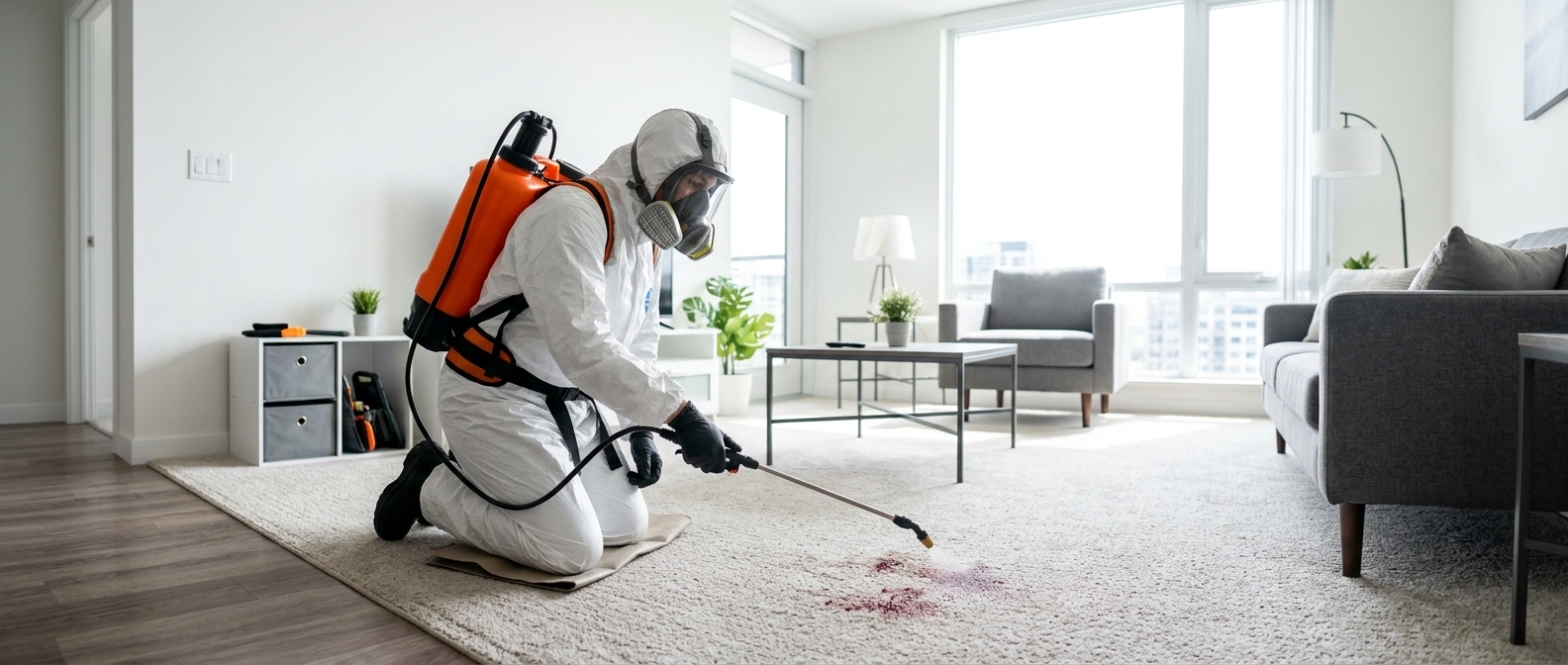
Carpets are particularly susceptible to permanent blood stains because the fibers quickly absorb the blood.
Remove fresh blood stains from carpet
- Blot immediately (do not rub!) with a clean, white cloth
- Apply cold water to the stain and blot again
- Dishwashing detergent solution: Dissolve a teaspoon of detergent in a glass of cold water, apply, leave to act for 10 minutes, then dab
- For stubborn stains: carefully apply hydrogen peroxide (3%) - test it in an invisible area first!
- After-treatment: Rinse with clear, cold water and allow to dry
For large areas Blood stains in the carpet - for example after an accident - we strongly recommend one professional cleaning. Akut SOS Clean has special cleaners that completely remove blood that has penetrated deep into the fibers without damaging the carpet.
Remove blood stains from the sofa and upholstered furniture
Upholstered furniture poses a particular challenge because blood can penetrate deep into the upholstery.
- Carefully remove excess blood with a spoon
- Use cold water and a clean cloth
- Mix baking soda paste (3 parts baking soda, 1 part cold water), apply and allow to dry
- Vacuum up dried paste
For leather covers:
- Wipe immediately with a damp cloth (cold!)
- Use mild soapy water
- Treat with leather care
Important: Never use bleach or harsh chemicals on upholstered furniture.
Remove blood stains from the mattress
The mattress is one of the most difficult surfaces to clean because it does not fit in the washing machine.
- Fresh stains: Dab immediately with cold water and kitchen paper
- Salt water method: Dissolve a tablespoon of salt in a glass of cold water, apply with a spray bottle, leave for 30 minutes
- Enzyme cleaner: specially developed for protein stains (drugstore)
- Drying time: Ventilate the mattress well
For mattresses that have been contaminated by large amounts of blood, self-cleaning is often not sufficient. Contaminated blood can penetrate deep into the mattress core. We would be happy to advise you.
Remove blood stains from clothing
- Soak immediately in cold water – at least 30 minutes
- Apply gall soap directly to the stain and rub in gently
- Washing machine: Wash at the lowest temperature (cold or 30°C)
- Dried stains: Soak beforehand with salt water or aspirin solution
Home remedy overview: Gall soap (fresh stains), salt water (sensitive substances), aspirin solution (dried stains), baking soda paste (gentle).
Remove blood stains from wood and hard floors
- Sealed wood/laminate: Wipe with cold water and a microfiber cloth. Use a mild all-purpose cleaner if necessary.
- Unsealed wood: Be careful – blood penetrates the pores of the wood. Apply hydrogen peroxide (3%) selectively, wipe with a damp cloth and reseal the wood.
- Tiles/Stone: No problem with water and cleaner. No acidic cleaners for natural stone.
When is professional help necessary?
Home remedies reach their limits when large amounts of blood are involved - for example after an accident, a medical emergency or a death. In these cases a professional is required Crime scene cleaning not only makes sense, but is often absolutely necessary for hygienic and legal reasons.
Akut SOS Clean specializes in precisely these situations. Our trained crime scene cleaners use professional enzymes and special cleaners that completely and hygienically remove blood and other biological residues.
We help you with:
- Large areas of blood contamination after accidents
- Cleaning after deaths or suicides
- Blood in hard-to-reach areas
- Situations in which self-cleaning is not enough
Frequently asked questions about removing blood stains
Can you still remove dried blood stains?
Yes, even dried blood stains can often be removed. Soak the stain in cold salt water for several hours. Enzyme cleaner or aspirin solution also help.
Why can't you wash blood stains with hot water?
Hot water causes the proteins in the blood to clot. This causes the stain to permanently bond to the fabric. Always use cold water.
Which home remedy works best?
For fresh stains: cold water + gall soap. For dried ones: Aspirin solution or enzyme cleaner. For upholstered furniture: baking soda paste.
When do I need a professional?
In the case of large amounts of blood, if blood has penetrated deep into the material or if there are hygiene concerns (risk of infection).